
2026-06-12 · Tom Reynolds
Why Your Conroe Basement Keeps Flooding After Every Heavy Rain (And What Actually Fixes It)
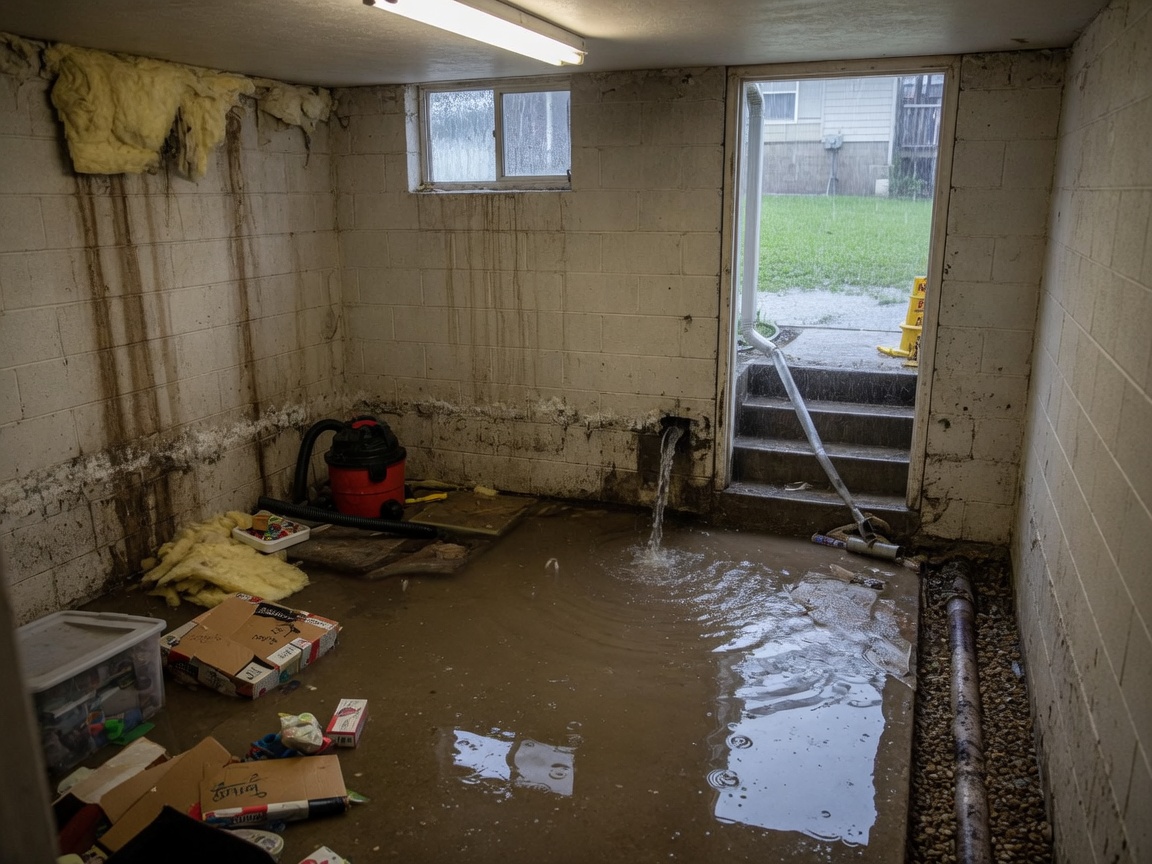
If your lower level, garage or crawl space floods after every heavy rain, the water is not random: something about your lot, your drainage or your sump is sending it there. Most homes in Conroe are built on slabs, so true basements are less common than in other parts of the country, but finished lower levels, garages, utility rooms, window wells and crawl spaces take on water the same way. The lasting fix is to move water away from the house before it reaches the foundation, and to dry whatever got wet within 24 to 48 hours so mold does not follow.
The Short Answer
Water enters because of one or more of these problems: soil that sheds rain toward the house instead of away from it, gutters and downspouts that dump water at the foundation, a high water table after prolonged rain, a failed or undersized sump pump, or cracks and gaps where plumbing or walls meet the slab. Pumping out the water treats the symptom. Fixing the grading and drainage treats the cause.
Why Conroe Homes Take On Water After Heavy Rain
Clay soil. Much of Montgomery County sits on clay that swells when wet and shrinks when dry. Wet clay drains slowly, so rain pools on the surface and presses against the foundation. As the soil dries it shrinks and pulls away from the house, leaving gaps that funnel the next storm straight down the foundation wall.
Flat lots and poor grading. Many subdivisions around Lake Conroe, Grand Central Park and April Sound were graded nearly level. Soil near the house should slope away, roughly 6 inches of drop over the first 10 feet. Settling, landscaping and flower beds often reverse that slope over time.
A high water table. Near the lake and creeks, the ground stays saturated after long wet spells. With nowhere for more rain to go, water rises and pushes through floor joints, cracks and drains. Homes in Montgomery and Panorama Village, close to the lake, see this more often.
Gutters and downspouts. A single downspout can send hundreds of gallons to one spot during a storm. If it ends at the foundation, that water goes straight to your lower level.
Sump and drain failures. A sump pump that is undersized, clogged or without power during a storm will not keep up. Storms often knock out power exactly when you need the pump.
How to Find Where the Water Is Coming From
Look at the pattern, because it points to the cause:
- Water at the base of walls, all around: usually surface drainage or a high water table.
- Water along one wall: a downspout, a low spot in the yard or a clogged drain on that side.
- Water at floor cracks or joints: groundwater pressure from below.
- Water at a window well or door: a clogged or overfilled well or poor sealing.
- Water near a pipe or fixture: a plumbing leak, not rain. See pipe burst cleanup.
What to Do the Hour the Water Arrives
- Turn off power to affected areas if you can do so safely and stay out of standing water near outlets.
- Move furniture, rugs and electronics to dry areas and take photos of everything for insurance.
- If water is still coming in, do not wait. Call us 24/7 at (936) 946-0393.
- Do not run household fans on wet carpet, because they can spread spores and contaminated moisture. Read Category 1, 2 and 3 water damage explained to know when floodwater is unsafe to handle yourself.
Professional basement and lower-level water removal pulls out standing water with commercial pumps and extractors, and structural drying removes the moisture that is still in the concrete, drywall and framing. That second step is what prevents mold, which can start in 24 to 48 hours. See how long drywall can sit wet before mold starts.
What Actually Stops It From Happening Again
Work from the outside in:
1. Regrade. Build the soil up so it slopes away from the house, and keep flower beds from trapping water against the foundation.
2. Fix gutters and downspouts. Clean gutters and extend downspouts at least 6 to 10 feet from the foundation, or tie them to a buried drain line.
3. Add a perimeter or French drain. A perforated drain pipe in gravel, with a place for water to exit, collects water before it reaches the foundation.
4. Install or upgrade a sump with a battery backup. Size the pump to your lot and discharge well away from the house. Test it twice a year.
5. Seal entry points. Seal cracks, plumbing penetrations and window wells once the structure is dry.
A drainage or landscaping contractor handles regrading and French drains. We handle the water damage cleanup, drying and any mold. If you are not sure which you need, call us and we will tell you honestly.
When Repeat Flooding Becomes a Health and Insurance Problem
Repeated wetting means repeated mold risk. If a musty smell returns after the area looks dry, there is probably moisture in a wall cavity or under flooring. See mold remediation. For insurance, document every event and read our step-by-step water damage claim checklist and the Lake Conroe flooding claim mistakes guide. Rising floodwater is usually covered by a separate flood policy, not a standard homeowner policy.
What Does Cleanup Cost?
A small lower-level extraction often runs a few hundred dollars to about $900, and full drying often runs $800 to $2,800 depending on size and days. See our Conroe water damage cost guide for a full breakdown.
Get Help Now
Flooded again? Call Conroe Restoration Group 24/7 at (936) 946-0393 for a free estimate. We serve Conroe, The Woodlands, Magnolia, Willis and surrounding Montgomery County. See all flood damage cleanup and water damage restoration services, or contact us.