
2026-08-12 · Tom Reynolds
Slab Foundation Homes in Conroe: Why Water Damage Under the Floor Is Harder to Catch
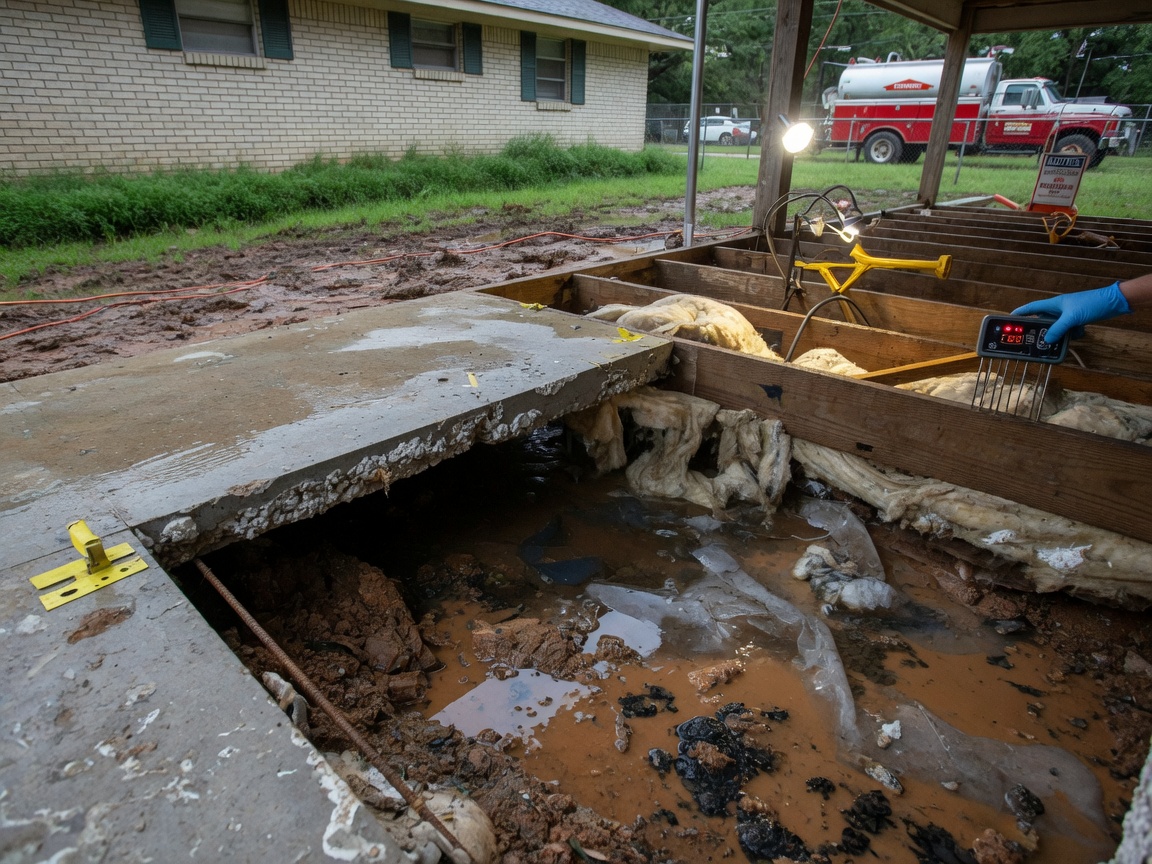
Most Conroe homes sit on concrete slabs, and a slab hides trouble. A slab leak or water that gets under flooring can go unnoticed for weeks, because you cannot see the concrete, the plumbing inside or under it, or the moisture in the soil below. This guide covers why slab water damage is hard to catch, the warning signs, how it is found and what to do about it.
Why Slab Foundations Hide Water
A slab has no crawl space or basement to inspect. Supply lines, drain lines and sometimes plumbing for water heaters and kitchens run through or under the concrete. Water from a leak can travel along gravel beneath the slab, rise through cracks and expansion joints, or wick into the bottom of walls and flooring. Clay soil around Montgomery County holds water, which keeps the problem going. By the time floors cup or odors appear, damage may have been developing for weeks.
Warning Signs of a Slab or Under-Floor Leak
- Unexplained increase in your water bill, even by 10 to 15 percent
- The sound of running water when everything is off
- A water meter that keeps moving when all fixtures are off
- Warm spots on the floor, which can signal a hot-water line leak
- Musty smell, especially in closets or one room
- Cupping, buckling or lifting of wood, laminate or vinyl flooring
- Cracked or separating tile and grout
- Baseboards that are stained, swollen or pulling away
- Damp carpet with no visible source
How Professionals Find Hidden Water
- Moisture meters read the moisture content of flooring, baseboards and drywall.
- Thermal imaging cameras show temperature differences that can point to wet areas, especially useful for hot-water leaks.
- Water meter test. Shut off all water use and watch whether the meter moves.
- Leak detection by a licensed plumber using acoustic or other specialized equipment to pinpoint a leak in a line under the slab.
We map the moisture and handle the water damage. If the source is a pipe under the slab, you will also need a licensed plumber to repair or reroute the line. We coordinate with your plumber and carrier so cleanup and repairs line up.
What to Do If You Suspect Water Under the Floor
- Check your water meter with everything off. If it is moving, you have a leak.
- Shut off the main water if you find active water or suspect a leak, and call a plumber and us. See what to do in the first 60 minutes after a pipe bursts.
- Document what you see, because slab leaks and resulting damage can be part of an insurance claim. Read our water damage claim checklist.
- Do not lay new flooring or paint over suspect areas until readings are normal.
How Slab Water Damage Is Dried and Repaired
Once the leak is stopped, we extract any standing water and use air movers, drying mats and dehumidifiers to pull moisture from flooring, baseboards, wall bottoms and, where possible, the slab surface. We monitor readings daily until they match dry reference materials. See structural drying and dehumidification and emergency water extraction. Materials that cannot be dried, like soaked padding or drywall, are removed. Then water damage repair rebuilds drywall, baseboards and flooring.
The Mold Risk
A damp slab and wall cavity in warm, humid Conroe air is a setup for mold, which can begin within 24 to 48 hours of wetting. See how long drywall can sit wet before mold starts. If mold is already present, see mold remediation.
Is It Covered by Insurance?
Many policies cover the resulting water damage from a sudden, accidental plumbing failure, but may not cover repairing the leaking pipe itself or damage from long-term seepage. Coverage varies by policy, so ask your carrier early and document everything.
Costs
Hidden-moisture jobs fall in the mid-to-upper ranges because of the extra detection and drying time. See the Conroe water damage cost guide.
Suspect Water Under Your Floor?
Call Conroe Restoration Group 24/7 at (936) 946-0393 for a free estimate and moisture assessment. We serve Conroe, Spring, Shenandoah, The Woodlands and surrounding Montgomery County. See our water damage restoration services or contact us.